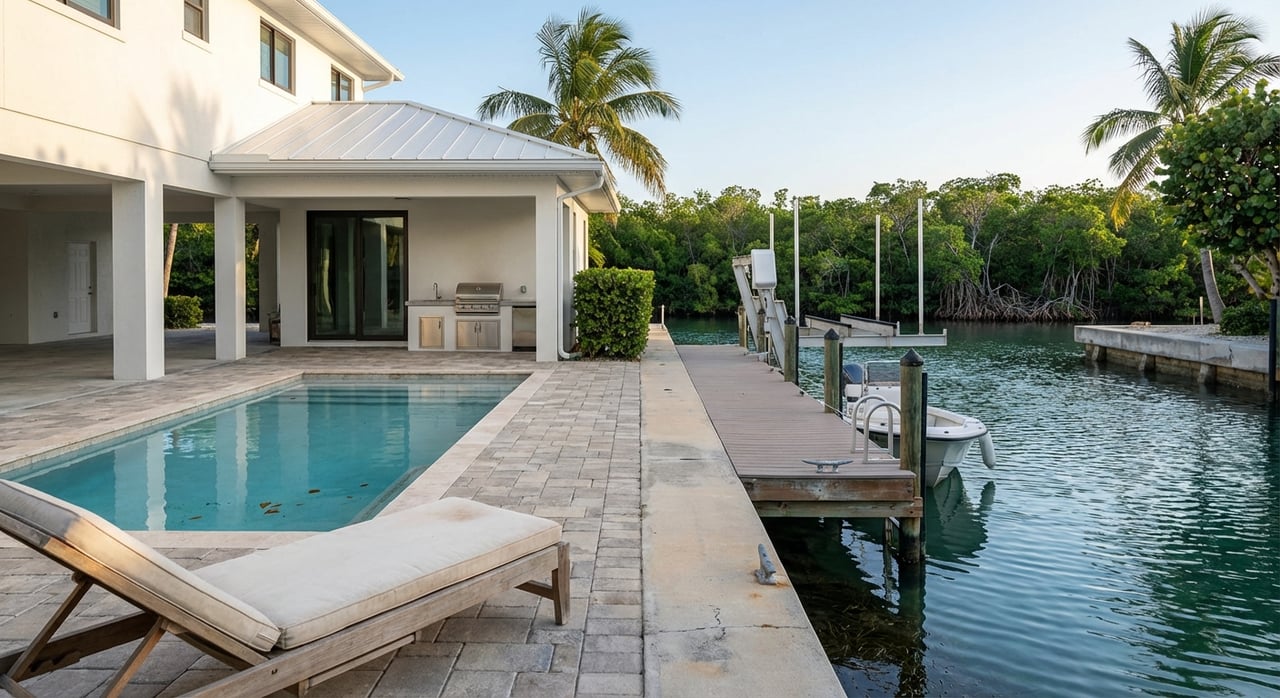
Sunrise on Sugarloaf Key feels different. The canals are glassy, the mangroves are still, and a skiff easing out to the flats is a normal way to start the day. If you picture coffee on the dock, a short paddle, and easy access to backcountry water, you’re in the right place. In this guide, you’ll learn what day-to-day life on Sugarloaf canals looks like, which details to verify before you buy, and how permits, utilities, and flood risk shape smart decisions. Let’s dive in.
Why Sugarloaf canals feel different
Sugarloaf Key sits in the Lower Keys near Mile Marker 17, about 20 to 30 minutes by car from most parts of Key West. That nearby access makes Key West the main hub for shopping, dining, and hospital services for many locals. The canals here line mangroves and shallow backcountry routes. You live close to the water, but the lifestyle is more skiffs, kayaks, and paddleboards than large-yacht dockage.
The canals are man-made and natural edges mixed together. Many are shallow at low tide and best suited to shallow-draft boats. A few streets feel wide and open; others end in quiet basins. The key is to match your boat and your habits to the exact canal.
Day-to-day on the water
Quiet mornings, paddles, and wildlife
Mornings often start on the dock with a paddleboard or kayak. You might spot turtles, rays, and shorebirds along mangrove edges. These waters are part of a larger system of seagrass and flats that support local wildlife and fishing. If you enjoy low-noise time outside, it is easy to build a routine around sunrise light and a short glide to nearby bays.
It is also a place where sensitivity matters. The Keys’ habitats are protected for a reason. Get to know the local rules and be mindful of how you anchor or pole along the flats. The seagrass, mangroves, and backcountry flats habitats are beautiful and important, and they guide how you use the water.
Skiffs, storage, and Sugarloaf Marina
Most canal-front homeowners here favor skiffs, flats boats, small bay boats, or pontoons. You see more poling platforms than flying bridges, and many residents trailer a second boat for flexibility. For day-to-day needs like fuel, bait, and rentals, Sugarloaf Marina at MM17 is a staple for locals and visitors. If you need a haul-out or major mechanical work, you typically plan a trip to larger yards in Key West or Marathon.
This rhythm keeps boating simple. Quick launches, short runs to the flats, and back to the house for lunch. Your dock becomes a staging area for rods, paddles, and coolers more than a long-term slip for a big cruiser.
Canal depth and water quality
How to read your canal
Depth, water quality, and permit history change from one street to the next. Some canals are tidally flushed and clear. Others are narrower, more sheltered, and can shoal at low tide. Avoid blanket assumptions. The county’s data is your best friend when you are comparing homes.
Start by checking the Monroe County canal KMZ and restoration list. You can see measured depths, canal names, and any county restoration ranking. If you are serious about a property, request a recent depth reading near the dock. Ask for the datum noted as mean low water so you know what to expect on skinny tides.
Quick property checklist
When you tour a canal home, bring a short list of questions:
- What is the mean low water depth at the dock, and do you have a recent depth certificate or bathymetry?
- Are there recorded permits and as-builts for the dock or seawall?
- Has the canal had any county restoration work? If so, when and what type?
- Are there bridge or clearance limits between the property and open water?
- What boat types have actually used this dock and route in recent seasons?
A small set of documents answers most of this. Ask for as-built plans and inspection sign-offs. Confirm the canal’s county ranking and any recent work in the Monroe County canal KMZ and restoration list.
Utilities and services that matter
Sewer vs septic on Sugarloaf
Sugarloaf is within the Cudjoe Regional service area. Many parcels connect to the central system, while some still rely on septic or on-site systems. Connection type is parcel-specific, and it affects both environmental impact and ownership costs. Always verify your address on the FKAA Cudjoe Regional Wastewater system pages and confirm any fees or requirements for your exact property.
Power, internet, and storms
Utilities in the Lower Keys work well, but they can cost more than on the mainland and they are storm sensitive. Internet options vary by street, with fiber still limited in some neighborhoods. Before you buy, call providers to confirm service at the address. For local permitting, storm-hardening, and utility questions, the Monroe County Building and Permitting office is a good starting point.
Permits and projects on the water
The Keys have layered rules for docks and shoreline work. Projects can involve local, state, and federal review. If your plan touches the seabed, shades seagrass, or alters water flow, expect to work through multiple agencies.
A practical rule of thumb: plan for months, not days, and expect design tweaks. Many dock projects require benthic surveys and features like grated decking to reduce shading over seagrass. For clear guidance on what needs approval and in what order, review the NOAA Florida Keys National Marine Sanctuary permits page, then coordinate with Monroe County once you know which state and federal boxes you must check.
Dredging is a special case. Deepening a canal is not a routine homeowner project here and often triggers federal, state, and sanctuary review. Before you assume anything about adding water depth, sit down with the county and sanctuary contacts and read the canal’s data in the county KMZ.
Risk, insurance, and smart prep
Flood and wind shape life and budgets across the Keys. Lenders often require flood insurance for waterfront homes, and preliminary quotes help you plan costs early. Ask for the parcel’s elevation certificate, and verify the FEMA flood zone before you write an offer.
Start your research with the county’s floodplain resources, then confirm details at the national level. The Monroe County flood resources page outlines local guidance. For address-level maps and documents, search the FEMA Flood Map Service. These two sources keep your decisions grounded in facts.
Here is a simple due-diligence list for waterfront buyers:
- Elevation certificate, FEMA flood zone, and any past flood claims.
- Mean low water depth at the dock and recent bathymetry, if available.
- Recorded permits and as-builts for docks, boat lifts, and seawalls.
- FKAA records confirming sewer connection and any on-site system requirements.
- Any open code cases or after-the-fact work in Monroe County Building and Permitting.
- Canal condition and any restoration activity in the Monroe County canal KMZ and restoration list.
A week in Sugarloaf Shores
Daily life balances quiet time on the water with quick trips up the road. You might paddle at sunrise, head out for a short skiff session on the flats, then make a grocery run into Key West. On weekends, neighbors gather on docks to clean rods and reset gear. Evenings bring a breeze, sunset colors, and the easy calm that comes from living this close to nature.
When storms are in the forecast, you pivot to preparation. You secure outdoor items, verify lift cradles and lines, snapshot your elevation and insurance documents, and check your generator and fuel. The routines are simple and repeatable, which is what you want when the weather changes.
Buyer and seller tips for canal-front success
- Choose by access, not just by view. The right canal for a paddleboarder may not be the right canal for a 24-foot bay boat.
- Prioritize durable construction and features that fit the Keys. CBS construction, impact openings, and a strong roof are common wish-list items for resilience.
- Keep records handy. Buyers and appraisers love clean permit files, elevation certificates, and recent dock photos.
- Stage the dock. For showings, clear gear, tidy lines, and highlight how a skiff or kayak fits the space.
- Verify everything. Use the KMZ for canal facts, FKAA for sewer, and the county portal for permits. Good data reduces surprises and supports better pricing and negotiations.
If you want a lifestyle that flows from your back door to the flats, Sugarloaf canals deliver. With the right prep, you can enjoy the quiet, protect your time on the water, and feel confident in your purchase.
Ready to explore canal-front living on Sugarloaf Key or compare neighborhoods across the Lower Keys? Let’s connect and build a clear plan around your boat, your budget, and your goals. Reach out to Jill Whitlatch to get started.
FAQs
What is daily boating like on Sugarloaf Key canals?
- Expect short runs in shallow water using skiffs, flats boats, kayaks, and paddleboards, with easy access to backcountry flats and mangrove edges.
Can I dock a 30-foot boat at a Sugarloaf canal house?
- Maybe; confirm mean low water depth, any route or bridge limits, and review the canal’s data in the Monroe County canal KMZ and restoration list before you commit.
How do I confirm sewer or septic at a Sugarloaf property?
- Check parcel details with the FKAA Cudjoe Regional Wastewater system and verify connection type and any required on-site systems.
What permits are needed to add or upgrade a dock in the Keys?
- Dock work often needs local, state, and federal approvals, so start with NOAA Florida Keys National Marine Sanctuary permits and coordinate with Monroe County.
How do I check flood risk and insurance needs for a canal-front home?
- Review local guidance at the Monroe County flood resources page, then confirm your parcel in the FEMA Flood Map Service and request an elevation certificate.